
Guide · beginner · 8 min
Takeaways from Using Personal Agents
Distilled from the Dojo's group chat: how fellows put Instinct, Town, Muse, Grok Bot and OpenClaw to work, and how to choose one.
In October, the Dojo's group chat turned into a running review of personal agents. These are AI assistants that do more than answer questions: they read your email and calendar, take actions on websites, and remind you of things before you ask. Fellows had tried five or six of them, on their real lives. This is what they found.
The moments that sold people
An agent that noticed something nobody asked about. George Babu had a family trip booked, and their son had a camp trip the morning after the flight home. A couple of days before leaving, Instinct sent a ping:

"Your son's camp kit - packed before you fly? You're back 10:36 PM Monday, bus leaves 8:50 AM Tuesday."
No one had asked it to connect the flight to the camp schedule. "After that, I was sold on making the time investment into setting up proactive agents for my personal and professional life," George wrote.
An agent that did a whole errand, end to end. Caroline Lewis asked Town A personal AI assistant (a 'Townie') that manages your inbox, schedules meetings, and handles busywork in the background. Town gives each user a personal AI assistant — a 'Townie' — that learns how you work, manages your inbox, schedules meetings, keeps a wiki of your preferences, and handles repetitive tasks quietly in the background. Integrates with your existing apps; tasks are delegated conversationally. · 1 member using

Caroline also has it send a weekly summary of every school email (the events, the times, "the insanity that is school communication") as a prep doc for the week, texted to the family and the nanny.
An agent as an executive assistant. Jehan Chu uses Instinct as an all-around EA: booking travel, scheduling meetings, life admin, light research, the to-do list, and short- and long-term reminders. It's proactive about what needs a reply in email and on the calendar. "Literally the best EA I've ever had," Jehan wrote, after going through three human ones that year.

An agent with its own inbox. Toby Rush gave their agent an email address. Toby forwards things to it ("add this to my contacts," "file this in that project"), captures to-dos and to-reads from wherever they are, sets reminders, and has it loop through email on a schedule. It's the simplest pattern in the thread, and you can copy it with almost any agent.

What people are using
 Instinct
An autonomous personal agent that lives in iMessage and acts across your apps — the Dojo's most-loved, and most-argued-about, EA.
Instinct is a personal assistant that understands your work and takes action across your applications and devices. You text it (it runs inside iMessage) or call it, and it handles life admin and errands: ordering groceries, booking trains, sending flowers, finding a court for the weekend, and working your email and calendar. Launched invite-only; free to start.
· 3 members using
- Town
A personal AI assistant (a 'Townie') that manages your inbox, schedules meetings, and handles busywork in the background.
Town gives each user a personal AI assistant — a 'Townie' — that learns how you work, manages your inbox, schedules meetings, keeps a wiki of your preferences, and handles repetitive tasks quietly in the background. Integrates with your existing apps; tasks are delegated conversationally.
· 1 member using
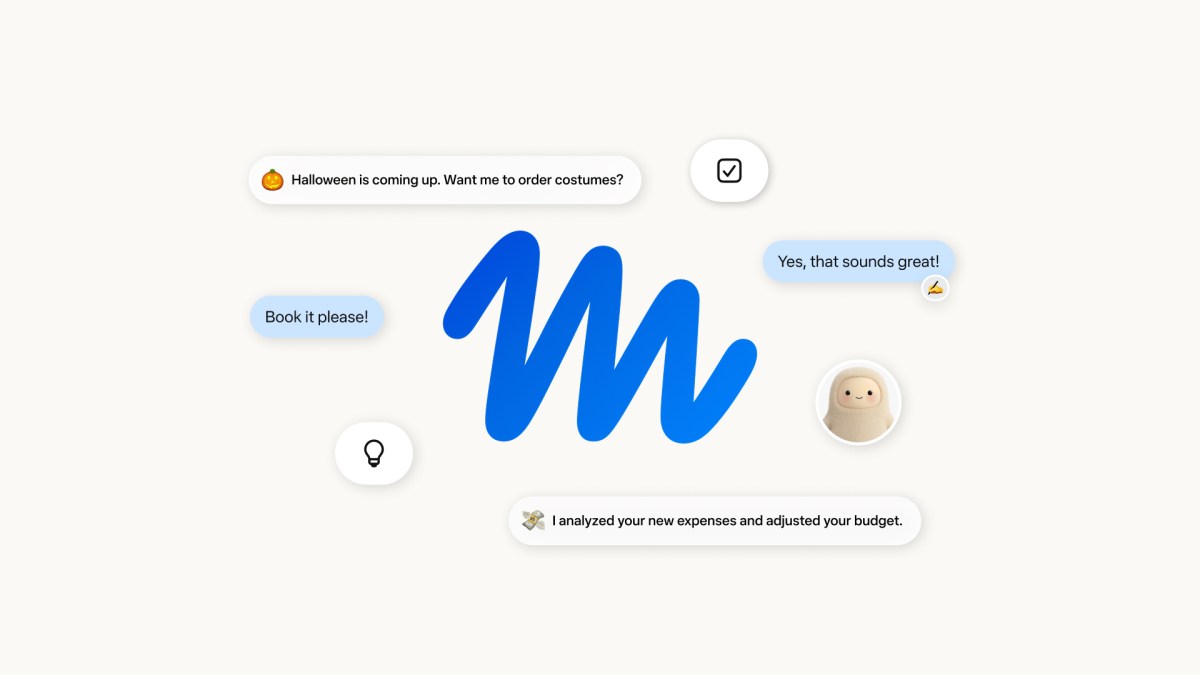 Muse
Meta's free, proactive personal agent that runs in its own secure VM and works like a messenger thread.
Muse is Meta's personal AI agent, launched September 2026. It proactively helps you stay on top of things, takes tasks off your plate (sending email, booking travel), and turns long-term goals into action plans. Each user's agent runs on a dedicated Muse Secure VM; you talk to it like a messenger contact and control what it can access. Free, with premium tiers; an end-to-end encrypted version has been announced.
 Grok Bot
Persistent agents, each with its own cloud computer, that sign into your tools and keep working 24/7.
Grok Bot, launched in beta in August 2026, is xAI's team of always-on agents. Each bot has its own computer, works inside the same tools and apps you do, and keeps running around the clock; you assign it work like a teammate. Available with SuperGrok and Cursor Pro/Teams plans, with a marketplace of ready-made bots.
· 1 member using
 Openclaw
Bringing people closer to AI — free, open-source, community-controlled.
OpenClaw is an independent, open-source AI platform designed to be personal, neutral, and owned by users rather than corporations. Built by global contributors, it emphasizes running AI locally on your own hardware without platform gatekeeping.
· 2 members using

An open-source agent that grows with you. Install it, give it your messaging accounts, and it becomes a persistent personal agent.
· 1 member using

 Claude Cowork
The agent mode in Claude Desktop that reads and writes your files and runs multi-step tasks, without a terminal.
Claude Cowork is Anthropic's agent for knowledge work, built into the Claude Desktop app (with web and mobile access). You give it a folder and a task, and it works through multi-step jobs: reading and writing files, using connectors and the browser, and running sub-agents in parallel, while asking before it crosses the boundaries you set. Shipped January 2026; included in paid Claude plans.
· 1 member using
 ChatGPT
OpenAI's assistant: chat, deep research, agent mode, apps and connectors, on every device.
ChatGPT is OpenAI's AI assistant. Beyond chat it offers deep research, an agent mode that works in a browser, image generation, apps and connectors to other services, projects and memory, across web, desktop and mobile. Paid plans include Codex.
· 1 member using


Instinct
. The most-discussed agent. Fans love its proactivity and its voice. The limits: it's single-threaded, so long conversations scroll away and you have to ask it for recaps (Jehan's complaint, from its biggest fan). And Punit Chiniwalla found that after the first wow, it felt "little better than a skin on my Claude work."An autonomous personal agent that lives in iMessage and acts across your apps — the Dojo's most-loved, and most-argued-about, EA.
Instinct is a personal assistant that understands your work and takes action across your applications and devices. You text it (it runs inside iMessage) or call it, and it handles life admin and errands: ordering groceries, booking trains, sending flowers, finding a court for the weekend, and working your email and calendar. Launched invite-only; free to start.
· 3 members using
Town
. Caroline's choice, paired with Claude Cowork: "pretty dialed for me now." Caroline also called it "very good at responsive email and as a headless CRM." Pocket Sun initially switched between Town, Instinct and ChatGPT, but now gravitates to Town as it has gotten faster. George was trialing it and liked the onboarding and its security pitch.A personal AI assistant (a 'Townie') that manages your inbox, schedules meetings, and handles busywork in the background.
Town gives each user a personal AI assistant — a 'Townie' — that learns how you work, manages your inbox, schedules meetings, keeps a wiki of your preferences, and handles repetitive tasks quietly in the background. Integrates with your existing apps; tasks are delegated conversationally.
· 1 member using
Muse
. Chang Xu sent the same requests to Instinct and Muse for weeks, and Muse consistently gave better replies. Jehan tried Muse two days after Instinct and preferred Instinct's voice, but admits to having been "already too embedded."Meta's free, proactive personal agent that runs in its own secure VM and works like a messenger thread.
Muse is Meta's personal AI agent, launched September 2026. It proactively helps you stay on top of things, takes tasks off your plate (sending email, booking travel), and turns long-term goals into action plans. Each user's agent runs on a dedicated Muse Secure VM; you talk to it like a messenger contact and control what it can access. Free, with premium tiers; an end-to-end encrypted version has been announced.
Grok Bot
. Jehan runs a Grok Bot swarm to help manage, research and double-check a house renovation, manage a portfolio, test investment ideas, and run one of Jehan's art philanthropy initiatives. Alongside the swarm is a Grok Bot "chief of staff" that can't yet manage the others.Persistent agents, each with its own cloud computer, that sign into your tools and keep working 24/7.
Grok Bot, launched in beta in August 2026, is xAI's team of always-on agents. Each bot has its own computer, works inside the same tools and apps you do, and keeps running around the clock; you assign it work like a teammate. Available with SuperGrok and Cursor Pro/Teams plans, with a marketplace of ready-made bots.
· 1 member using
Making money with an agent. One fellow gave an agent two days to make money by following "make money with AI" posts. It failed: the posts were all engagement bait.
OpenClaw
. Toby has it wired into so many things that switching is painful, but it doesn't do the proactive nudges, so Toby is eyeing Grok Bot.Bringing people closer to AI — free, open-source, community-controlled.
OpenClaw is an independent, open-source AI platform designed to be personal, neutral, and owned by users rather than corporations. Built by global contributors, it emphasizes running AI locally on your own hardware without platform gatekeeping.
· 2 members using
What to weigh when you choose
The thread kept coming back to the same few questions:
Does it act before you ask? Proactivity is what converted George and what tempts Toby to switch. It's the difference between an assistant and a chatbot.
Does it remember? Jehan's recap problem shows that even good agents lose the thread of long conversations.
Is it fast enough to use? Speed decides which agent you actually reach for, and it changes: Pocket gravitates to Town now that it has gotten faster.
Is it more than a wrapper on the model you already use? If you already work in Claude all day, judge the agent against that, the way Punit did.
Can it really connect across your tools, accounts, email and calendars? Most agents handle one inbox and one calendar well. Check whether it can work across several accounts (personal and work Gmail, two calendars) and the apps your week actually runs on, or whether you end up copying things in by hand.
What can it do out of the box, and what can you add? Look at which actions are built in (send an email, book a meeting, fill a form, buy something) and how easily you can add your own: a connector to your CRM, a skill, a custom tool. Open agents like OpenClaw
and Hermes AgentBringing people closer to AI — free, open-source, community-controlled.
OpenClaw is an independent, open-source AI platform designed to be personal, neutral, and owned by users rather than corporations. Built by global contributors, it emphasizes running AI locally on your own hardware without platform gatekeeping.
· 2 members using
let you add almost anything, at the cost of setup. Polished ones like Instinct and Town do more on day one but are harder to extend.An open-source agent that grows with you. Install it, give it your messaging accounts, and it becomes a persistent personal agent.
· 1 member using
How much will it cost to switch later? The more you wire an agent in, the harder it is to leave. George paused just thinking about how a new agent would conflict with the existing ones.
Is it for your personal life or your firm? See below.
Chang's method is the best way to decide: send the same requests to two agents for a few weeks and compare. One person's demo doesn't tell you much.
Personal agents at work: be careful
Toby drew the sharpest line in the thread. Instinct and Muse "feel like personal agents, not work agents." Town claims to be both, but:
"There is going to be strong resistance (and rightly so) to allow personal agents into the work environments. Agents never forget. They capture context and memory. The IP leakage from personal agents in an enterprise is massive."
Security is already how fellows choose between products. Varun Malhotra asked about Town because it "seems to have better security than Instinct," and Pocket was "hearing security concerns" about Instinct back in August. Before you connect a personal agent to work email, ask what it stores, where, and who at the vendor can see it. Most firms will have rules here, and Microsoft shops in particular may already have a managed option.
Even the most ambitious setups keep a person in the loop. George's team runs agents for prospect research, call prep, call debriefs and suggested emails, but George is "not ready to let them go send emails on our behalf."
Not for everyone (yet)
Not everyone in the group is convinced. "What do people use town / muse / instinct for? I feel the use is not as much for me," Yao Meng asked. Toby's answer is a good test: these agents pay off most for repetitive tasks you can describe once, like booking, scheduling, summarizing, reminding and filing. If your week is mostly judgment calls, start smaller. Give an agent one job and its own inbox, and see whether it earns more.
Bring your story
Personal agents get their own discussion at the Nov 19 session: use cases and best practices, pooled from the group. Jehan asked to hear everyone's "best thing I've done with my agent (so far)." Bring yours.