Agentic VC Dojo · Monthly All-Hands
Agents at Work
Thursday · November 19, 2026 · 9:00 AM PT
The next 60 minutes
Three things, in order
- 01A whirlwind of Claude and ChatGPT updates, and how to think about using them15m
- 02Personal agents: wins, disappointments, show-and-tell25m
- 03The home connector idea, and how to get started15m
- 04Questions and what's next5m
Fast today, on purpose. Two sessions in December go deeper.
01 · What's new · May
Now you can: Hand an agent a goal that takes hours or days, and give your team shared agents for its workflows.
Anthropic
- May 28Claude Opus 4.8
- May 28Dynamic workflows: hundreds of parallel subagents
OpenAI
- May 21Codex goal mode, Appshots, locked computer use
- May 21Workspace agents generally available
01 · What's new · June
Now you can: Delegate from Slack or your phone, put tasks on a schedule, and fix a draft by pointing at it.
Anthropic
- Jun 9Claude Fable 5 and Mythos 5
- Jun 12Edit Claude's drafts in place
- Jun 23Claude Tag: delegate to Claude in Slack
- Jun 30Claude Sonnet 5
OpenAI
- Jun 2Codex plugins for every role, plus Sites
- Jun 4ChatGPT memory that stays up to date
- Jun 17Scheduled tasks page replaces Pulse
- Jun 18Record & Replay turns demos into skills
- Jun 25Codex Remote GA: run Codex from your phone
01 · What's new · July
Now you can: Close the laptop: agents keep working in the cloud, and Claude can write to your Outlook, calendar and OneDrive.
Anthropic
- Jul 7Cowork on web and mobile; M365 write access
- Jul 10Claude memory rebuilt as editable entries
- Jul 24Claude Opus 5
OpenAI
- Jul 9ChatGPT Work and the new desktop app
- Jul 9ChatGPT Sites public beta; Atlas retired
- Jul 9GPT-5.6 Sol
01 · What's new · August
Now you can: Share work by link with anyone, keep one memory across all your Claude work, and let Claude drive your browser.
Anthropic
- Aug 7Auto mode becomes Claude Code default
- Aug 19New artifact sharing: open without an account
- Aug 25One memory across chat and Cowork
- Aug 26Claude in Chrome generally available
OpenAI
- Aug 11Import from Claude Code, Cowork and Cursor
01 · What's new · September
Now you can: Ask any chat for a deck, doc or design; get agents that keep working between conversations; and ChatGPT with PitchBook and FactSet built in.
Anthropic
- Sep 16Cowork and chat become one Claude
- Sep 16Designs, decks and docs in any chat
- Sep 22Claude Opus 5.5
- Sep 28Claude Sonnet 5.5
OpenAI
- Sep 3GPT-6 Astra
- Sep 10SharePoint, Box, Dropbox in ChatGPT Library
- Sep 10ChatGPT for Financial Services
- Sep 10Agents API: the Codex harness for developers
- Sep 11Custom GPTs to be retired
- Sep 17ChatGPT for Word
- Sep 22GPT-6 Sol and Luna in Work and Codex
- Sep 29Dots: always-on agents in ChatGPT
- Sep 29Space, Pages and a Meetings plugin
- Sep 29Codex Cloud
01 · What's new · October
Now you can: Work in native Google Docs, Sheets and Slides, turn data into live dashboards and explainer videos, and manage it all from one Plugins page.
Anthropic
- Oct 6Claude in Google Docs, Sheets, Slides
- Oct 8Claude Dashboards beta; Docs and Slides GA
- Oct 8Claude Motion: animated explainers (beta)
- Oct 15Nested sessions and a rebuilt desktop Code tab
- Oct 21Claude Duet research preview
- Oct 29One Plugins page for connectors and skills
OpenAI
- Oct 7GPT-6 with Intelligent UI in ChatGPT
- Oct 16ChatGPT Slides
01 · What's new · November
Now you can: Send Claude to the partner meeting, build the model and the whiteboard in chat, and run DCFs and memos on a finance-trained GPT.
Anthropic
- Nov 5Enterprise security center and shadow-IT blocking
- Nov 9Claude Fable 5.2 and Mythos 5.2
- Nov 10Claude Sheets, Whiteboards and Data
- Nov 10Partner apps open inside Claude
- Nov 12Claude Meetings (beta)
OpenAI
- Nov 10Businesses in ChatGPT and Business Agents
- Nov 17GPT-6.2 Astra and Sol
- Nov 17ChatGPT for Sales
- Nov 18Dots on by default in Enterprise
01 · What's new · Claude, for a fund
Four Claude changes worth using this week
- Cowork and chat are one Claude Sep 16Hand over the data-room export; get back a first-draft IC memo and a summary deck, even after you close the laptop.
- One memory, and you can see it Jul 10 · Aug 25Claude keeps what it learns about your fund in Settings › Memory › Topics, editable. Sensitive topics stay out unless you opt in.
- Docs, Sheets, Slides, and Google files Sep 16 · Oct 6Decks, docs and models in any chat; native Google Docs, Sheets and Slides edited from Claude or inside the file.
- Meetings, Data and Whiteboards Nov 10 · 12Claude takes the partner-meeting notes; portfolio KPI dashboards on certified metrics that LPs can see live without your data access; a whiteboard that turns IC debate into owners and dates.
01 · What's new · ChatGPT, for a fund
Five ChatGPT changes to know
- ChatGPT for Financial Services Sep 10PitchBook, Crunchbase, Preqin, FactSet, Capital IQ and Datasite built in, on GPT-6 Astra; it drafts models and memos in your firm's templates, with information barriers. Started with investment banking and equity research; sold to eligible institutions.
- Workspace agents: build once, share with the team GA May 21Describe the workflow and ChatGPT builds the agent; it runs on a schedule or from Slack and asks before sensitive steps. OpenAI's own example scores inbound leads, emails them and updates the CRM: swap leads for pitches and it's a deal-intake agent.
- Dots: agents that keep working Sep 29Its own cloud computer and browser, 4,000+ apps, and a memory that learns how you judge things. It acts on new evidence without being asked: rerun the portfolio model when a company's monthly update lands, and flag what changed. Rules decide what it may do alone.
- ChatGPT Work, also inside Microsoft 365 Jul 9 · Sep 10–17An agent that stays with a project for hours and hands back sheets, slides and docs; OpenAI says finance teams cut month-end close from days to hours. Plus a Word add-in and SharePoint folders: compare term sheets straight from the deal folder.
- GPT-6, and now 6.2 for valuation work Oct 7 · Nov 17GPT-6 answers with charts and small tools, but pick a higher reasoning level for real diligence. OpenAI says Astra works Financial Modeling World Cup challenges in Excel about four times faster than the winning human, and 6.2 is trained on DCFs, valuation workbooks and investment memos.
01 · What's new · Artifacts, rebuilt
One chat, seven kinds of work product
- Docsliving, shared documents
- Slidesdecks from a prompt
- Designon-canvas, your design system
- Datalive dashboards, certified metrics
- Sheetsformulas, tabs, export to .xlsx beta
- Whiteboardsbrainstorm with Claude live beta
- Motionanimated explainers, MP4 Team/Ent beta
They work in Claude Code too, and you can view and edit them on iOS and Android. Pre–Sep 16 chat artifacts are now "legacy": still shareable, no new ones.
01 · What's new · Tell your IT person
Four defaults changing under you
- ChatGPT Dots are on for Enterprise since Nov 18Unless an admin opted out. A dot can learn from connected apps unprompted, and disconnecting an app doesn't delete what it already pulled.
- Claude Data turns on for Enterprise Fri, Nov 20Unless an owner already saved a setting. Sheets, Whiteboards and Motion stay off on Enterprise until an admin enables them (Organization settings › Artifacts); on Team they're already on.
- Custom GPTs are being retired announced Sep 11Your "memo GPT" needs to move to a plugin.
- Claude Meetings skips outside guests Nov 12Founder pitch calls need an admin to allow external participants.
01 · What's new · A takeaway for the bold
Ditch PowerPoint. Have Claude write the deck as code.
HTML, JS and SVG. Your brand as code, not a template. Live data and polls inside. Versioned, and shared as a link that opens without an account.
You're looking at one. This deck is a web page. And we build decks and memos this way for funds:
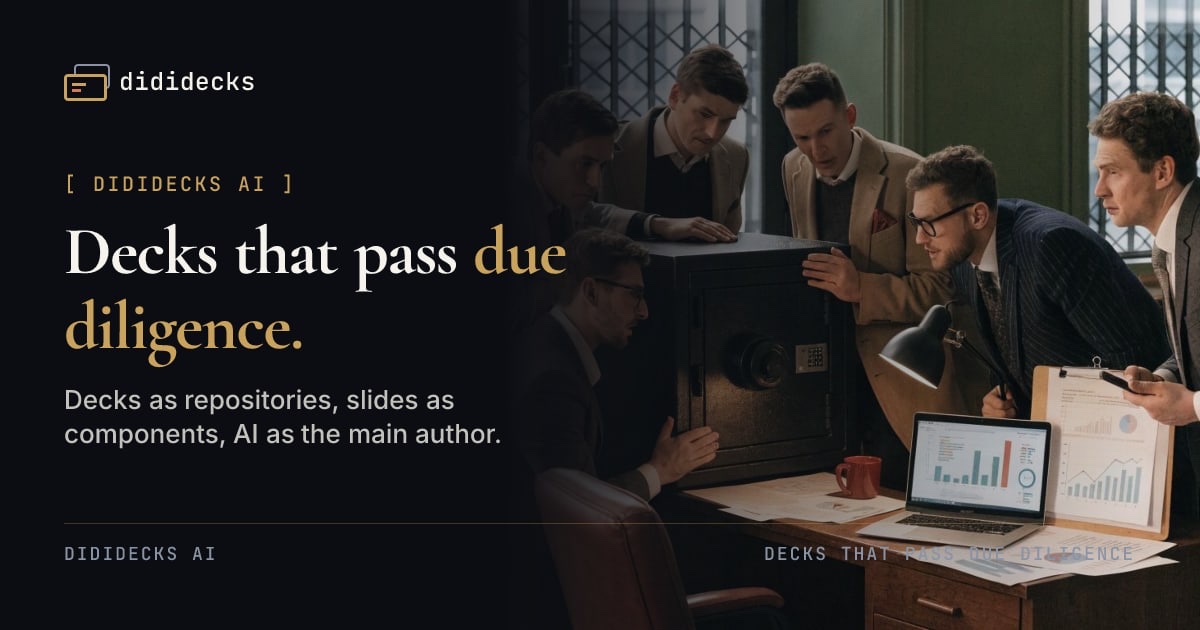
DidiDecks AI is Lossless Group's code-first slide-deck system for materials that have to survive due diligence. Each deck is a repository and each slide a component; AI writes most of it, every claim carries a source, decks publish under the client's brand, and exports look like Keynote.
MemoPop AI is Lossless Group's open-source investment memo orchestrator. Thirty-three specialized agents extract data, analyze documents, research the company and fact-check the draft against a firm's own memo framework, producing a first draft in 10 to 15 minutes and branded exports in several formats.
01 · How to think about using it
Eight habits of an agent-native VC
- 01Use Claude Code and Codex, not just the chat
- 02Write briefs and specs, not prompts
- 03Put routine work on a schedule
- 04Let models work in HTML, not .pptx
- 05Experiment with enterprise context
- 06Give it direct access: APIs and your browser
- 07Automate your personal life
- 08Create your firm's home connector
The guide, with examples and tools for each: fullstack-vc.com/guides/agent-native-vc-2027 ↗
02 · Personal agents
What worked? What let you down?
Instinct, Town, Grok Bot, Muse, OpenClaw, Hermes, and now the big labs' own: ChatGPT's Dots and Claude Duet. The group chat has been testing them on real lives for weeks.
- The moment it did something you didn't ask for
- An errand it handled end to end
- What you'd never give back
- Where it guessed wrong, or went quiet
- Accounts it couldn't reach
- What you turned off, and why
Background reading: fullstack-vc.com/guides/personal-agents-in-the-dojo ↗
02 · Personal agents
A win only counts once someone else can repeat it.
- 01Write it down as a brief or a skill: what you asked, what it needed access to, what you checked.
- 02Share it where the group looks: the chat for the story, the hub for the recipe.
- 03Add the tool to your stack on your hub profile, so others can find who uses what.
- 04Put it behind your firm's home connector, so the whole team gets it, not just you.
02 · Show-and-tell
Share your screen. Five minutes.
One thing your agent did for you this month: what you asked, and what came back. Rough is fine.
03 · A home connector
A connector per tool. Skills per person. Memory per app. Nothing spans them.
This is every team using Claude or ChatGPT right now. So no agent can do this: "Find the company in our CRM, pull our research note from the wiki, and draft the follow-up."
03 · A home connector
One connector the whole team adds. Four things behind it.
- Skillsthe firm's playbooks: how we write a memo, how we log a founder call
- Contextthesis, portfolio, who's who, written once
- Memorywhat the agents learn, as plain files with full history
- ToolsCRM, wiki, email, calendar, each with its own permissions
Who can read, who can write, what needs a human to approve: set once, for everyone.
03 · A home connector
Not a someday idea. Three firms run on one today.
- ✓One connector per firm: Palmer AI, The Water Foundation and Lossless each add one connector, and Claude calls their Twenty, Outline and Plane through it, with shared skills.
- ✓Shared files: event-hog ran a three-person team's conference from Claude in October; every note became a saved change under its author's name.
- →Why it's easy now: it needs a version-controlled store (GitHub and GitLab work), and Cloudflare Artifacts makes it cheap and invisible: git repos for agents, next to the connector on Workers, and nobody sees GitHub.
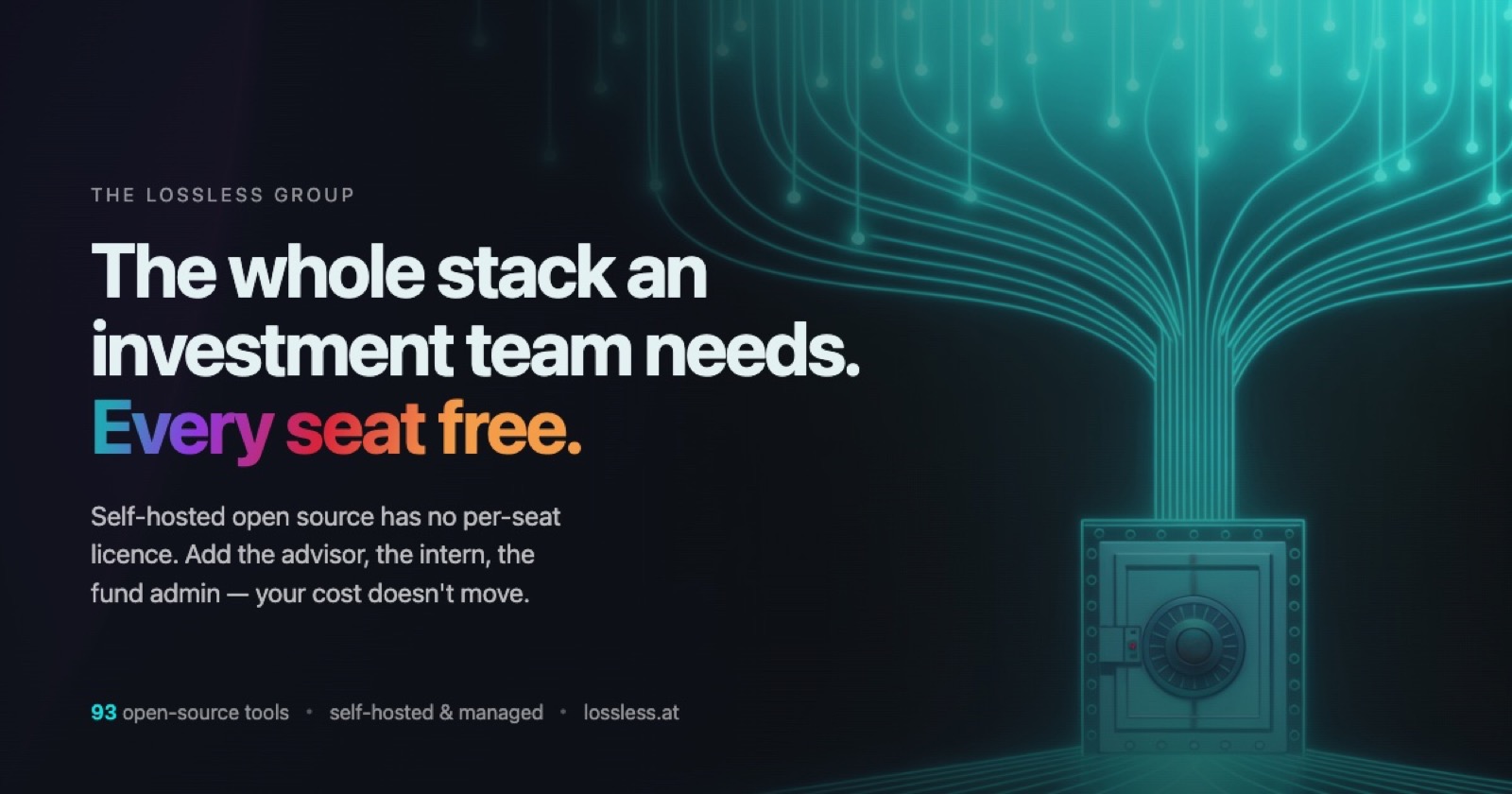
lossless.at is Lossless Group's self-hosted stack for investment teams: open-source tools such as Twenty for CRM, Outline for the wiki and Plane for projects, deployed for each firm, managed by agents and free of per-seat licensing. Each firm reaches its stack from Claude through a single connector.
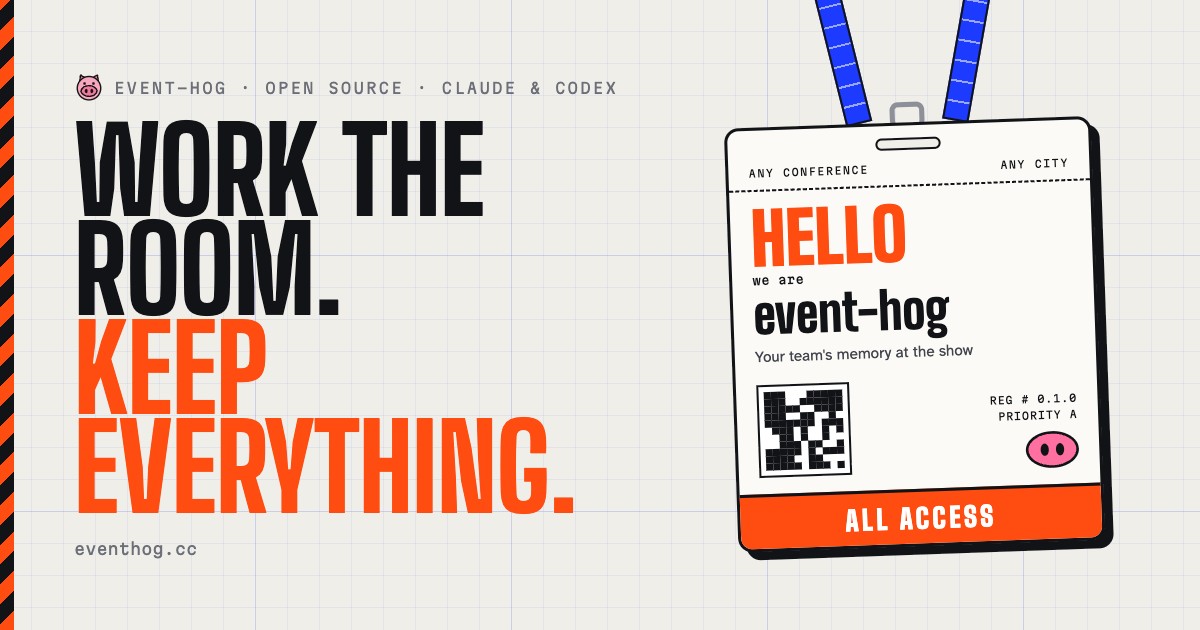
event-hog is an open-source MCP connector built by Lossless Group. A team working a conference logs who they met, captures slides and notes, and drafts follow-ups from inside Claude, ChatGPT, Cursor or Codex; everything lands as files in a shared git repository on Cloudflare, so each change is attributed and reversible.
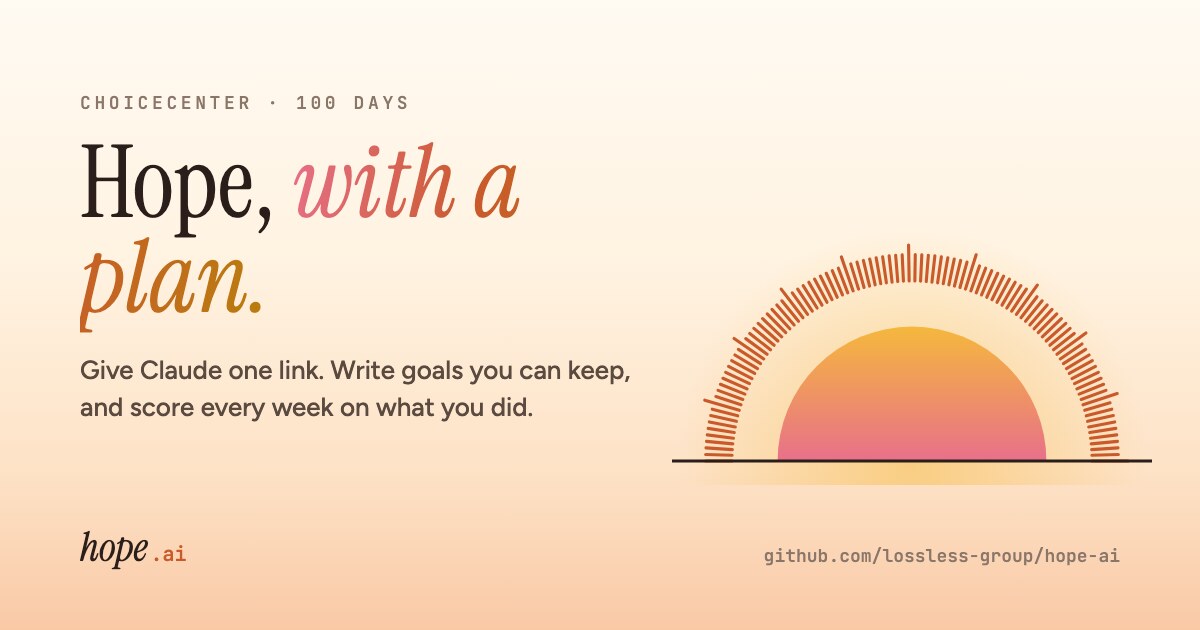
hope.ai is Lossless Group's open toolkit for the ChoiceCenter Personal Strategic Plan, the 100-day goal document a leadership cohort works through together. Give Claude the repository and its skill interviews you one goal at a time, then helps you score each week on what you did. Plans, tracking and weekly answers live together in one folder.
kay-os is Lossless Group's design for a colony of personal assistant agents that share one record. The record is plain git on Cloudflare Artifacts: agents with a terminal, such as Hermes, clone it directly, and phone apps reach it through a connector. A knowledge graph is rebuilt from the files on every change.
03 · A home connector
Name the folders so the model knows there are rules.
- context-v/thesis, portfolio, people, plans
- context-v/agent-skills/shared skills, one SKILL.md each
- docs-v/documentation for people and agents
- changelog-v/dated notes on what changed
- memory-v/what the agents learn and save
"memory" and "docs" mean a hundred layouts in a model's training data. The -v is ours: it says this folder follows a pattern, so find it and keep to it. Not required; it's how we work.
03 · A home connector
You don't write it. You ask Claude Code or Codex for it.
Build me a home connector: a remote MCP server on Cloudflare
Workers that my team adds once in Claude and ChatGPT.
Behind it, a version-controlled repo (Cloudflare Artifacts,
or GitHub/GitLab): context-v/,
context-v/agent-skills/ (served as prompts), docs-v/,
changelog-v/, memory-v/. Every write is a commit under the
person's name; tools only add. Proxy our CRM and wiki through it
with stored credentials. Sign-in per person, a permission table
per folder and tool, and approval for sensitive actions.
The full prompt and recipe: fullstack-vc.com/guides/one-home-connector ↗. Start with the files, then add one tool at a time.
03 · Get started this week
Your first home connector in five steps.
- 01Open Claude Code or Codex in the desktop app, in an empty folder. No terminal needed.
- 02Paste the prompt from the recipe, and answer its questions as it builds.
- 03Files first: have Claude save a note, then find it from a fresh chat.
- 04Add your most-used tool, usually the CRM, read-only.
- 05Invite one teammate, and give them the same connector.
Recipe and prompt: fullstack-vc.com/guides/one-home-connector ↗. Stuck? Bring it to a December session.
Thanks for being in the room
Bring a story next time.
The replay goes up on the session page.